AHA vs BHA vs PHA: Which Exfoliant Does Your Skin Need?
Chemical exfoliants dissolve the cellular glue binding dead skin cells, but water solubility, lipid affinity, and molecular size completely change how they perform on your skin barrier.
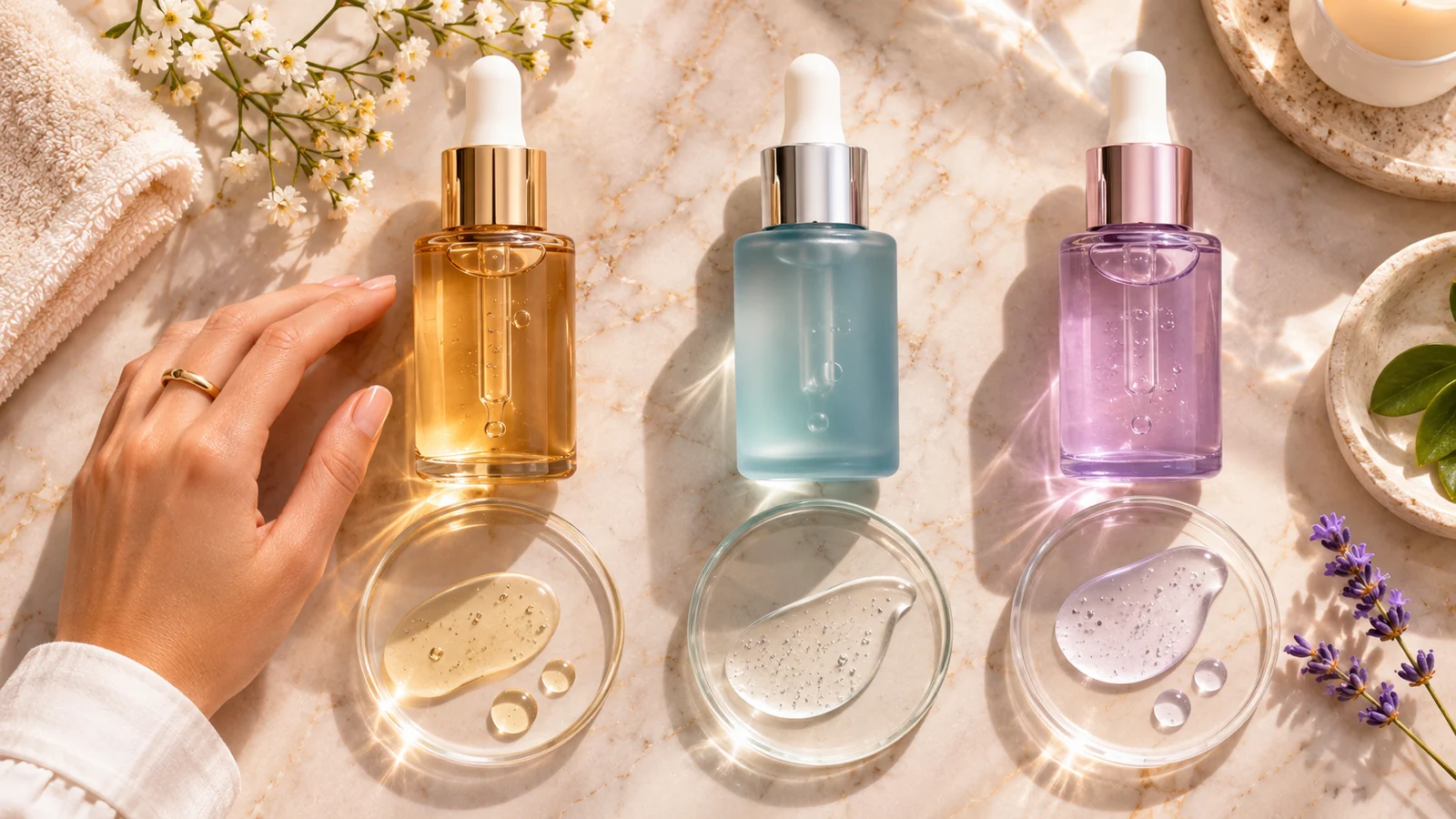
AHA (Alpha Hydroxy Acid): Water-soluble (glycolic, lactic, mandelic). Best for surface roughness, sun-damaged skin, and uneven tone.
BHA (Beta Hydroxy Acid): Oil-soluble (salicylic acid). Best for oily skin, clogged pores, blackheads, and acne-prone skin because it penetrates sebum inside follicles.
PHA (Polyhydroxy Acid): Large molecular size (gluconolactone, lactobionic acid). Gently exfoliates surface cells with minimal stinging, making it ideal for sensitive or redness-prone skin while providing humectant hydration.
Alpha Hydroxy Acids
Glycolic (small molecule), Lactic (hydrating), Mandelic (large molecule). Works by loosening corneodesmosomes on the epidermal surface.
Beta Hydroxy Acid
Salicylic Acid. Cuts through sebum into the pilosebaceous unit to exfoliate dead cellular debris trapped inside the pore.
Polyhydroxy Acids
Gluconolactone and Lactobionic Acid. Slow, non-aggressive penetration with multiple hydroxyl groups that attract water molecules.
AHA vs BHA vs PHA: Complete Molecular Comparison
Understanding the physiological differences between these three acid families helps eliminate guesswork and prevents accidental over-exfoliation:
| Feature | AHA | BHA | PHA |
|---|---|---|---|
| Primary Acids | Glycolic, Lactic, Mandelic | Salicylic Acid | Gluconolactone, Lactobionic Acid |
| Solubility | Water-soluble | Lipid-soluble (oil-soluble) | Water-soluble |
| Molecular Size | Small to Medium (76 – 152 Da) | Medium (138 Da) | Large (178 – 358 Da) |
| Depth of Action | Stratum corneum surface | Surface & inside pore lining | Outer stratum corneum surface |
| Primary Skin Targets | Sun damage, texture, dullness | Clogged pores, acne, blackheads | Sensitive skin, dehydration, rosacea-prone |
| Sun Sensitivity Risk | High (Requires daily SPF) | Low / Neutral | Very Low |
| Humectant Hydration | Moderate (Lactic acid) | Low (can be drying) | High (Multiple hydroxyl groups) |
Personalized AHA vs BHA vs PHA Finder
Select your primary skin focus to see which chemical exfoliant mechanism aligns best with your biological needs:
AHA (Alpha Hydroxy Acid)
Target Ingredients: Glycolic Acid (5-10%) or Lactic Acid (5-10%)
AHAs are water-soluble acids that dissolve the bonds holding dead skin cells to the surface, significantly refining uneven texture and dullness.
Safety Guardrail: Increases sun sensitivity; always wear daytime broad-spectrum SPF 30+.
How Skin Naturally Exfoliates (Desquamation)
The human epidermis undergoes continuous turnover. In healthy young skin, basal keratinocytes divide, migrate upward through the spinous and granular layers, differentiate into corneocytes, and shed from the stratum corneum in a balanced 28-day cycle.
This process is governed by enzymes called kallikrein-related peptidases that break down protein bridges (corneodesmosomes). When aging, dehydration, or UV damage impairs these enzymes, dead corneocytes accumulate, resulting in dullness, flaking, or clogged follicular openings. Chemical exfoliants assist this natural shedding process by cleaving ionic bonds.
Acid Dissociation & pH Simulator
The effectiveness of a chemical exfoliant depends heavily on formulation pH and the pKa of the acid. Adjust the pH slider below to observe how free acid availability changes:
Warning Signs of Over-Exfoliation
- Persistent stinging when applying ordinary moisturizer or water.
- A shiny, waxy tight appearance without oiliness (dehydrated tightness).
- Sudden redness, irritation, or patches of dry peeling.
- Increased breakouts or rash-like clusters of micro-bumps.
To restore comfort, switch to a minimal 3-step routine: gentle hydrating cleanser, a barrier cream formulated with ceramides and squalane, and daytime sunscreen. Avoid all acids, scrubs, and retinoids for at least 2 to 3 weeks until full barrier resilience returns.
Frequently Asked Questions
Can I use AHA and BHA in the same skincare routine?
Yes, but with caution. You can alternate nights (e.g., BHA on Tuesday, AHA on Friday) or look for a professionally formulated multi-acid product where concentrations and pH have been laboratory-balanced to avoid excessive irritation.
Do I really need to exfoliate my skin?
No. Exfoliation is an optional cosmetic intervention, not an essential biological requirement. Healthy skin with an intact moisture barrier desquamates naturally on its own.
Which acid is best for dark spots and hyperpigmentation?
AHAs (particularly glycolic and lactic acid) are most researched for post-inflammatory hyperpigmentation because accelerating surface cell turnover disperses accumulated melanin deposits faster.
Why do AHAs cause sun sensitivity?
AHAs thin the hyperkeratotic stratum corneum, allowing UV rays to penetrate more easily to vulnerable living epidermal layers. Broad-spectrum SPF 30 or higher must be worn every morning when using AHAs.
CHEMICAL EXFOLIATION & BARRIER SHIELDING
Recommended AHA Toners, BHA Exfoliants & Recovery Creams
As an Amazon Associate I earn from qualifying purchases. Glycolic acid surface toners, salicylic pore clears, ultra-mild PHAs, and lipid recovery creams for balanced exfoliation.
The Ordinary Glycolic Acid 7% Toning Solution
7% Glycolic acid AHA exfoliating toner
Paula's Choice Skin Perfecting 2% BHA Liquid Exfoliant
2% BHA Salicylic acid liquid exfoliant
COSRX AC Collection Calming Liquid Mild with PHA
Gentle PHA exfoliating toner liquid
The Ordinary Lactic Acid 10% + HA 2% Exfoliating Serum
10% Lactic acid gentle AHA serum
CeraVe Moisturizing Cream with Ceramides and Hyaluronic Acid
Barrier-repairing ceramide cream
La Roche-Posay Anthelios Melt-in Milk Sunscreen SPF 60
Broad-spectrum daily facial sunscreen